Harvest
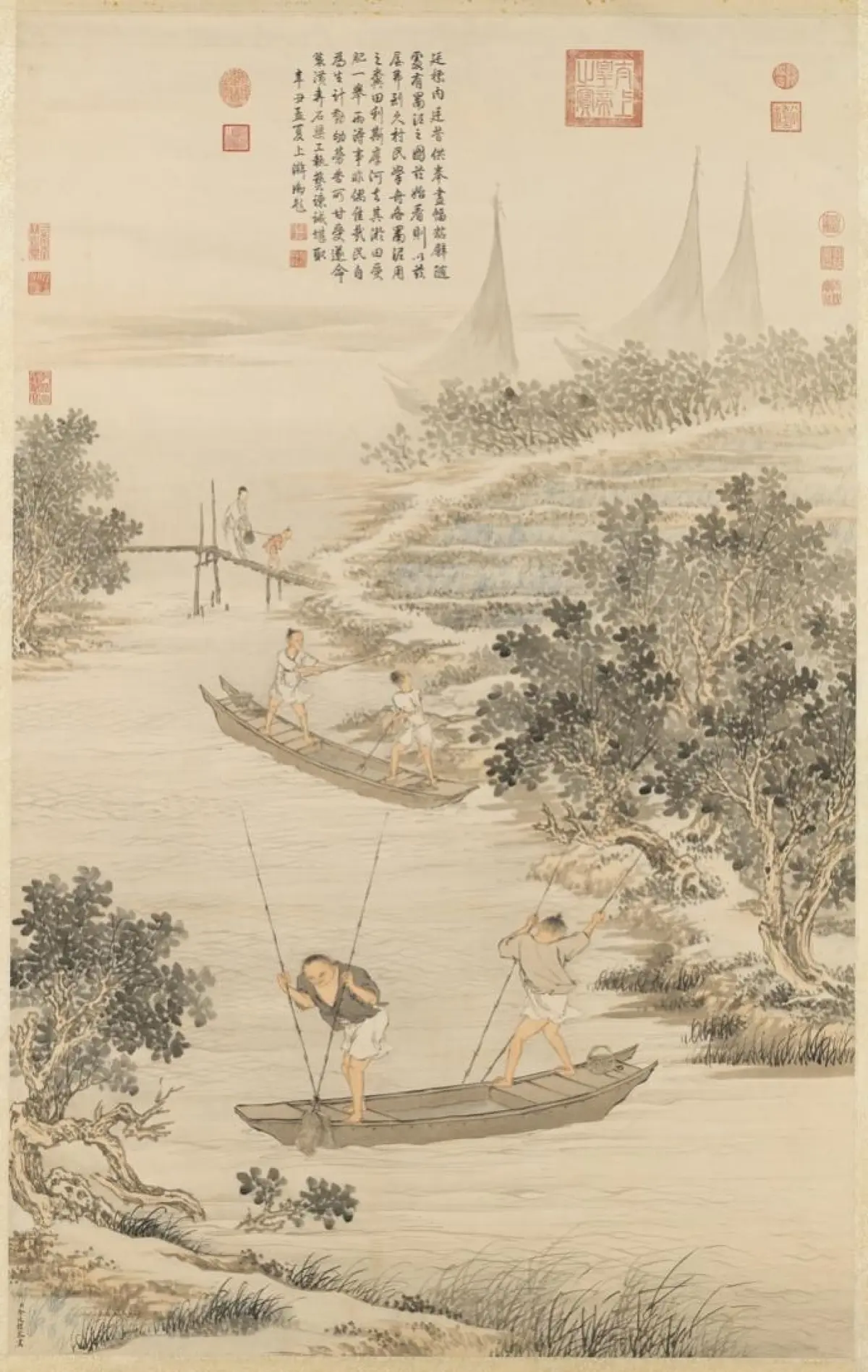
Two to four workers used a small boat and bamboo scoops to lift silt from the riverbed.
Field Commons田野的共同体
Case 01 · From Riverbed to Field
A practice sustained for nearly a millennium linked waterways, fields, labour and nutrient cycles in Jiangnan. Today, judgement must be rebuilt between historical experience and modern testing.
01 · Historical scene
People first recognised that silty water could irrigate and fertilise. They later developed a complete practice of harvesting, resting, mixing, composting and field application. It supplied fertility while organising seasonal work and maintaining waterways.
Silt-rich water from the Jing River was recognised as both irrigating and fertilising fields.
The Northern Song established the Field Siltation Bureau to promote irrigation with silty water.
Southern Song texts clearly record intentionally applying river silt around fruit trees and to fields.
Wang Zhen’s Agricultural Treatise listed river silt among four major categories of fertiliser.
Silt harvesting became routine seasonal work in Jiangnan and supported rice, mulberry and fruit cultivation.
River silt remained an important fertiliser in parts of Jiangnan.
Chemical fertilisers and specialised dredging displaced the practice from everyday production.
Heritage and water-governance initiatives revived interest while raising new safety questions.
02 · Work sequence
Fresh sediment was not simply tipped from a boat onto a field. Historical records describe harvesting, transport, resting and composting—a treatment sequence that also reflects experiential awareness of risks from fresh, reduced sediment.
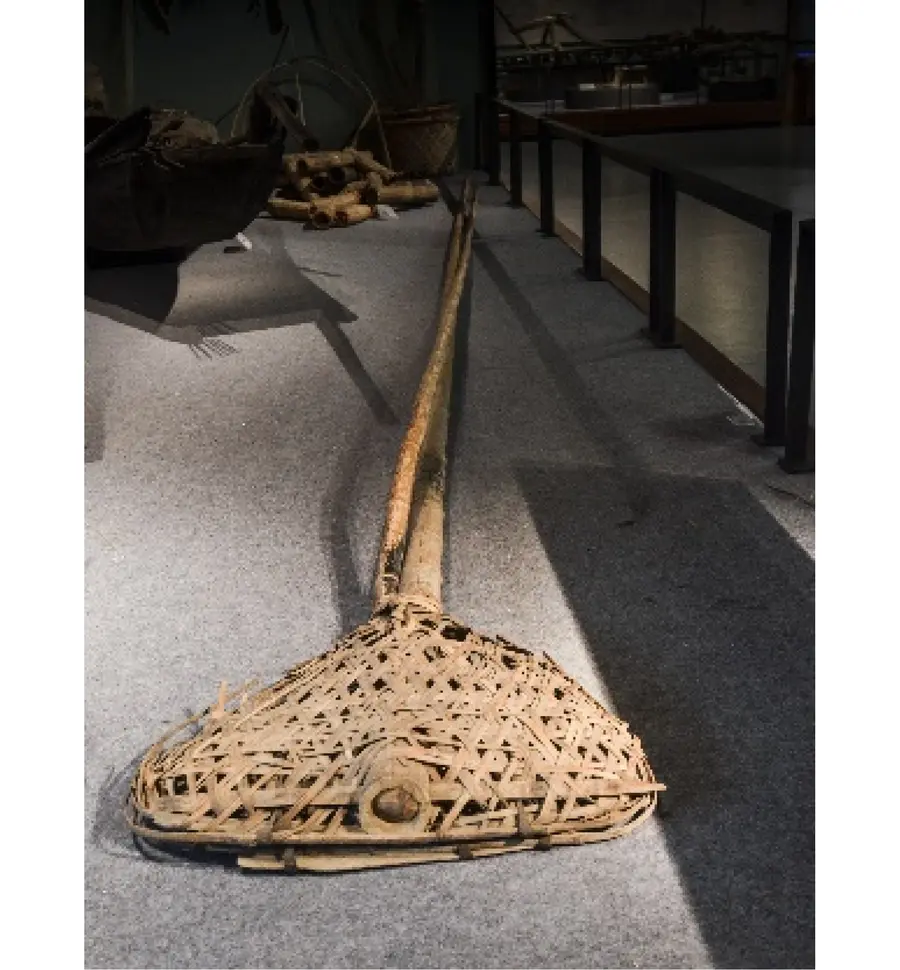
Two to four workers used a small boat and bamboo scoops to lift silt from the riverbed.
They repeatedly opened and closed the bamboo poles, raising silt and releasing it into the boat.
At the bank, shovels or a wooden bucket transferred the load to a pond or prepared ground.
Fresh sediment drained, weathered and dried before further handling.
It was mixed with weeds, retted or composted, then broken into flakes or powder.
The prepared material served as a basal amendment in seedbeds, paddies, mulberry fields or orchards.
03 · Quantitative evidence
Provincial averages compiled in the paper show higher organic matter, total nitrogen, available phosphorus and available potassium in Jiangsu river silt than in the province-wide mean soil values. Available phosphorus shows the largest contrast.
04 · Present-day decision lab
Confirm which conditions a real project has met. There is no single “safe” button: even a complete checklist only supports professional feasibility assessment, not direct field application.
05 · Evidence and limits
Pre-treated sediment may improve structure, water retention, organic matter and nutrient status. Fresh, highly reduced material may temporarily suppress plants or microorganisms. Modern waters may also introduce trace metals, PAHs, salts or microcystins. Historical drying and composting therefore merit study but cannot replace modern testing.
Verify editions, image information, regions and periods, and explain why a practice worked in a particular society.
Measure composition, treatment effects, ecological risk and long-term performance to define viable uses.
Contribute waterway history, costs, use needs and governance conditions so decisions are workable and accountable.
This page supports public learning and teaching discussion. It is not engineering advice for sediment reuse, fertilisation or remediation.