One page per case
Each question uses the interaction that best fits it rather than a fixed outreach template.
Popular Science
The field is treated here as a shared place of observation, interpretation and responsibility. Waterways, farmland, drinking water and the human body all belong to it: materials move through them, while knowledge is formed by researchers, practitioners and publics.
Project overview
Each case has its own interactive page. Readers can make an initial judgement before examining historical sources, data relationships and scientific limits. Conclusions retain their conditions and point back to real responsibilities and choices.
Each question uses the interaction that best fits it rather than a fixed outreach template.
Historical records, measurements, statistical relationships, metaphors and open questions remain distinct.
Researchers, students, creators and practitioners jointly refine the content, language and setting of use.
Case map
One begins with historical labour in the Jiangnan river network; the other with the elemental composition of a glass of water. Both ask how environmental knowledge is found, tested and brought into public life.
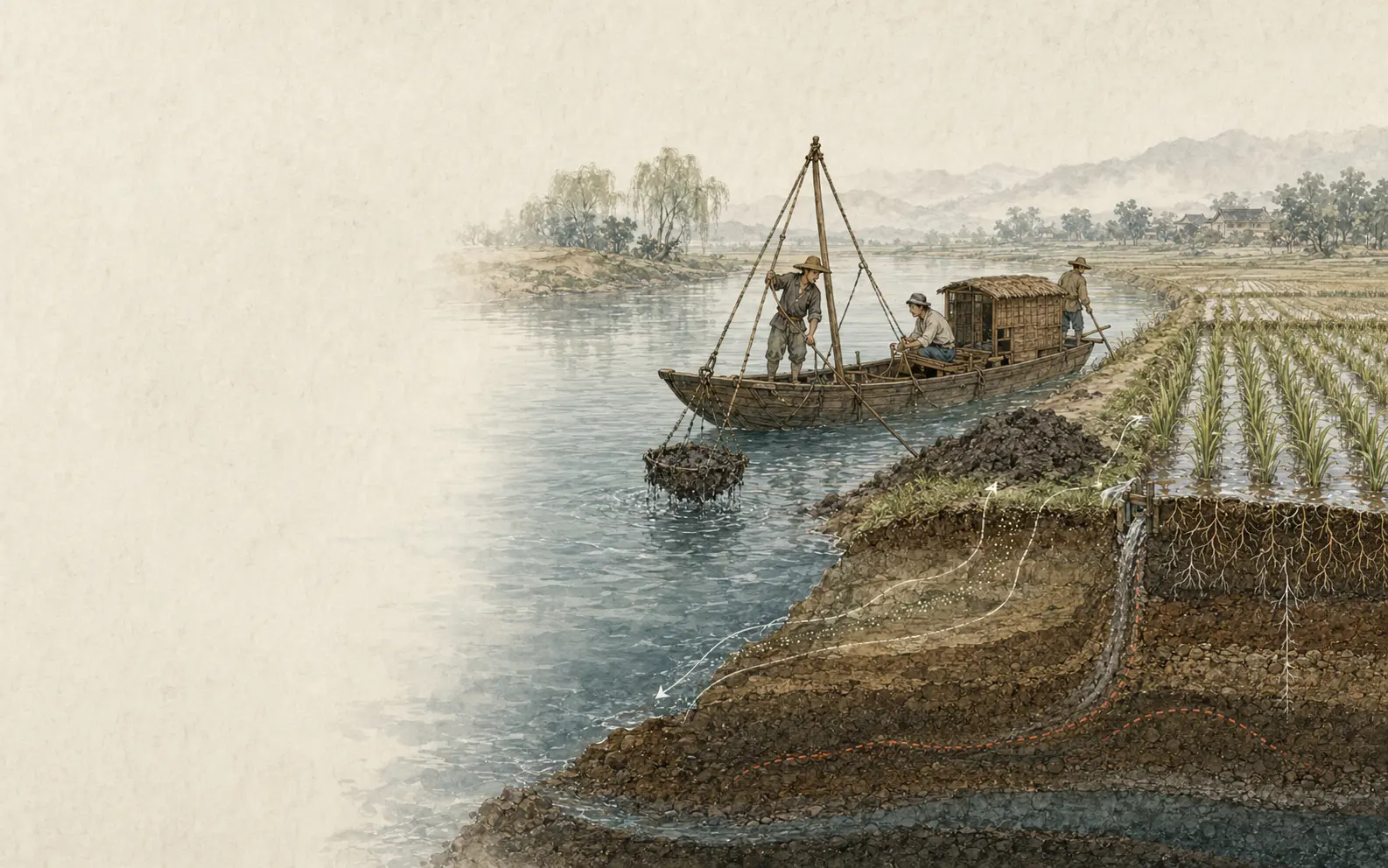
Historical setting × present decision
When is river silt a resource, and when does it become a risk?
Reconstruct a practice spanning nearly a millennium, compare nutrient evidence, and use five conditions to judge whether dredged sediment merits present-day reuse.
Paper × public media × participation
How does one glass of water connect rocks, rivers, blood and public health?
Guess which medium most closely tracks drinking-water standards, follow elemental correlations and their outliers, and see how toxicology, technology, sensory concerns and public choices shape a standard.
Why a commons
Historians recover the temporal and institutional setting of a practice. Environmental scientists test evidence and risk. Visual and media collaborators create public entry points. Practitioners and readers supply new conditions and counterexamples.
Maintain the data, provenance and interpretive boundaries.
Contribute local experience, use conditions and practical constraints.
Turn complex relationships into public material that can be read and explored.
Use choices, questions and feedback to test whether a narrative is genuinely useful.
FIELD COMMONS · OPEN SERIES
Cases can support teaching, public events, interdisciplinary collaboration and conversations with funders. Future work will address water, soil, minerals, food and environmental health, with research sources, collaborators and support stated openly.